In any industrial plant, an unexpected shutdown is rarely due to a single isolated issue. Moreover, the impact of a technical incident results in planning disruptions, missed delivery deadlines, increased internal coordination complexity, and added pressure on the entire production chain. That's why talking about preventive maintenance of industrial machinery isn't just about inspecting equipment every now and then: it's about production continuity, control, and responsiveness.
For many companies, the challenge is not just having machinery up and running, but ensuring it maintains stable and reliable performance over time. It is in this context that preventive maintenance is seen not as an expense, but as an industrial management tool.
The real problem when a machine stops
Murphy's Law. A breakdown can happen at the worst possible time: during a production peak, with orders in progress, or when the line is running at full capacity. How we resolve the issue, and the tools we have at our disposal, is what distinguishes companies that manage equipment from those that focus on managing production.
Therefore, if you want to reduce technical incidents in your production plant and their collateral effects (lower efficiency, more errors, increased operational pressure, and a potential impact on overall performance), you must invest in preventive maintenance of equipment and machinery.
Discover the custom solutions we offer at DAC Industrial
What exactly is preventive maintenance?
Preventive maintenance is the set of planned actions taken on a machine or facility to prevent a breakdown from occurring. The goal is to detect wear, misalignments, or anomalies in time and correct them before they turn into an unplanned shutdown.
Preventive Maintenance vs. Corrective Maintenance
The difference is simple:
- Corrective maintenance: action is taken after the problem has already occurred, that is, when the machine has already stopped working.
- Preventive maintenance: it's carried out before the problem impacts production.
In the short term, it may seem more convenient to "fix problems as they arise." But in practice, this logic tends to create more urgency, more improvisation, and less control.
How to perform maintenance?
Waiting for a breakdown to occur usually ends up being more expensive
When you only intervene when something fails, the cost you have to bear isn't just the repair. There are also costs in terms of:
- diagnostic time,
- loss of production pace,
- replanning,
- possible impact on quality,
- and dependence on an urgent response.
In contrast, a well-defined preventive plan helps you work with more foresight and less operational stress.
How Preventive Maintenance Impacts Production Continuity
The value of preventive maintenance should not be measured only by the parts replaced or inspections performed, but by what it prevents:
- Fewer unplanned downtime. This is the first major advantage. If you regularly inspect a machine's critical points, it's easier to detect symptoms before they turn into a failure.
- Greater stability in line performance. A production line doesn't just need to run; it needs to do so consistently. When equipment is inspected, adjusted, and properly maintained, the line's performance tends to be more stable and predictable.
- Better equipment lifespan and less premature wear and tear. Proper maintenance also helps protect your investment.
Signs that your plant needs a preventive plan
There are still many companies that think, "as long as everything is working, there's no need to touch anything." The problem is that the change of heart happens by force and comes too late. Some indicators worth reviewing are:
- Recurring incidents. If the same machine experiences issues repeatedly, no matter how small, it's not a coincidence: it's a warning.
- Excessive reliance on emergency repairs. When maintenance always comes in the form of an emergency, the problem isn't the repair: it's the lack of planning.
- Lack of traceability, spare parts, or clear routines. If there is no defined criteria for what to inspect, when to do it, or which spare parts to have available, the operational risk increases.
What elements should a good preventive maintenance plan include
Not all equipment requires the same level of monitoring. But, in general, a well-designed plan should include at least these points:
- Inventory of critical equipment. You need to know which machines have the greatest impact on production continuity and prioritize them.
- Maintenance schedule. It's not about doing maintenance "whenever you can," but about defining realistic frequencies based on usage, workload, and criticality.
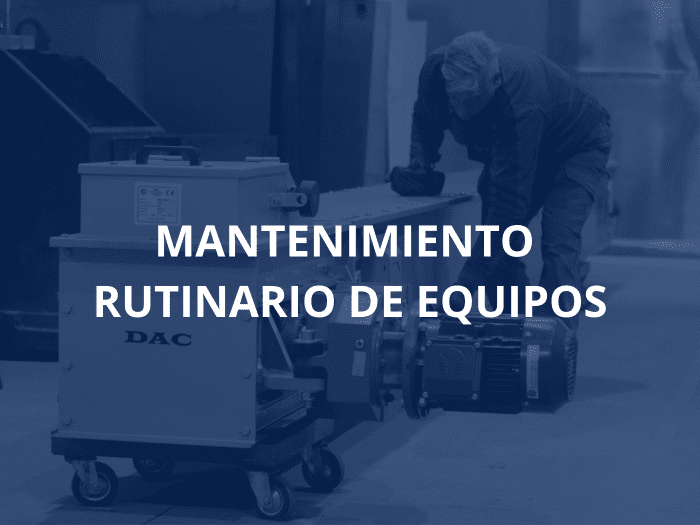
- Lubrication, adjustments, cleaning, and inspections. These types of actions are part of the most basic maintenance, but they are often what prevent major problems.
- Key spare parts and technical criteria. Not all spare parts need to be in stock, but it is advisable to identify the most sensitive or critical components to reduce response time in the event of a failure.
When it makes sense to have external technical support
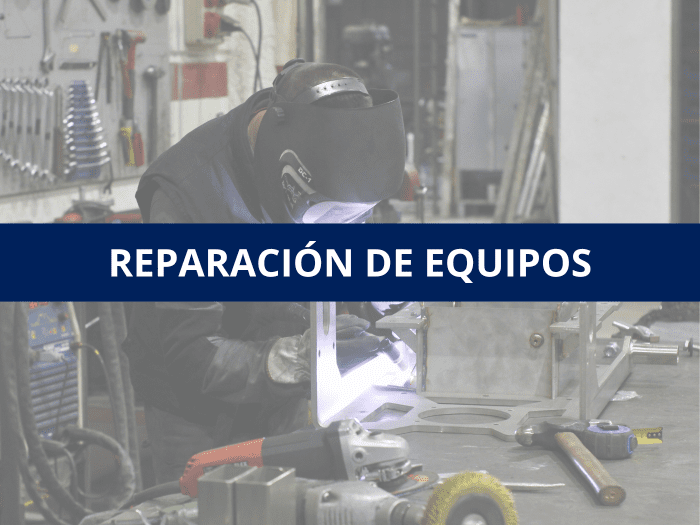
Some plants have a very capable in-house maintenance team. But there are also cases where working with external support provides additional expertise, specialization, or responsiveness. At DAC Industrial, we offer this additional support with our team, which has extensive experience in machinery repair.
This is usually especially useful when:
- there are custom-made equipment or specific installations,
- specialized technical diagnosis is needed,
- you want to implement a more rigorous preventive maintenance plan,
- or you are looking for a partner who understands both the machine and its production impact.
Conclusion: prevention is protecting production
Preventive maintenance is not just a recommended technical practice; it's a management decision that directly affects production continuity. In a demanding industrial environment, preventing means reducing unplanned downtime, working more organizedly, protecting equipment, and gaining operational stability. At DAC Industrial, this is how we understand our work.
And, above all, it means moving from a reactive approach to a proactive one.
If your company wants to reduce the risk of production downtime and define a preventive maintenance plan for industrial machinery with technical expertise, at DAC Industrial we offer maintenance, repair, and spare parts supply services that work to improve the production of our clients' industries.